
 English
expand_more
English
expand_more
 Español
 Deutsch
 Français
 Português
 Türkçe
 Polski
 العربية
 हिन्दी
Registration Directories
What Is This Guide & Why Do You Need It?
In the era of AI-driven search engines, voice assistants, and recommendation algorithms, traditional SEO is evolving rapidly. This specialized guide — “Directories for Registration to Improve AI Visibility” — is not just a static list of platforms. It’s a structured tool that helps webmasters, marketers, and business owners adapt their websites to the new ranking rules applied by neural networks such as Google SGE, Bing AI, and other large language models.
The core idea: modern AI models are often trained on structured, authoritative, and diverse information sources. Registering your site in trusted directories increases the likelihood that neural networks will recognise your resource as reliable, index its data, and use it when generating answers for users.
What’s Inside the Guide?
This is a detailed directory list, organised by category with practical recommendations. Below are the key sections included in the document.
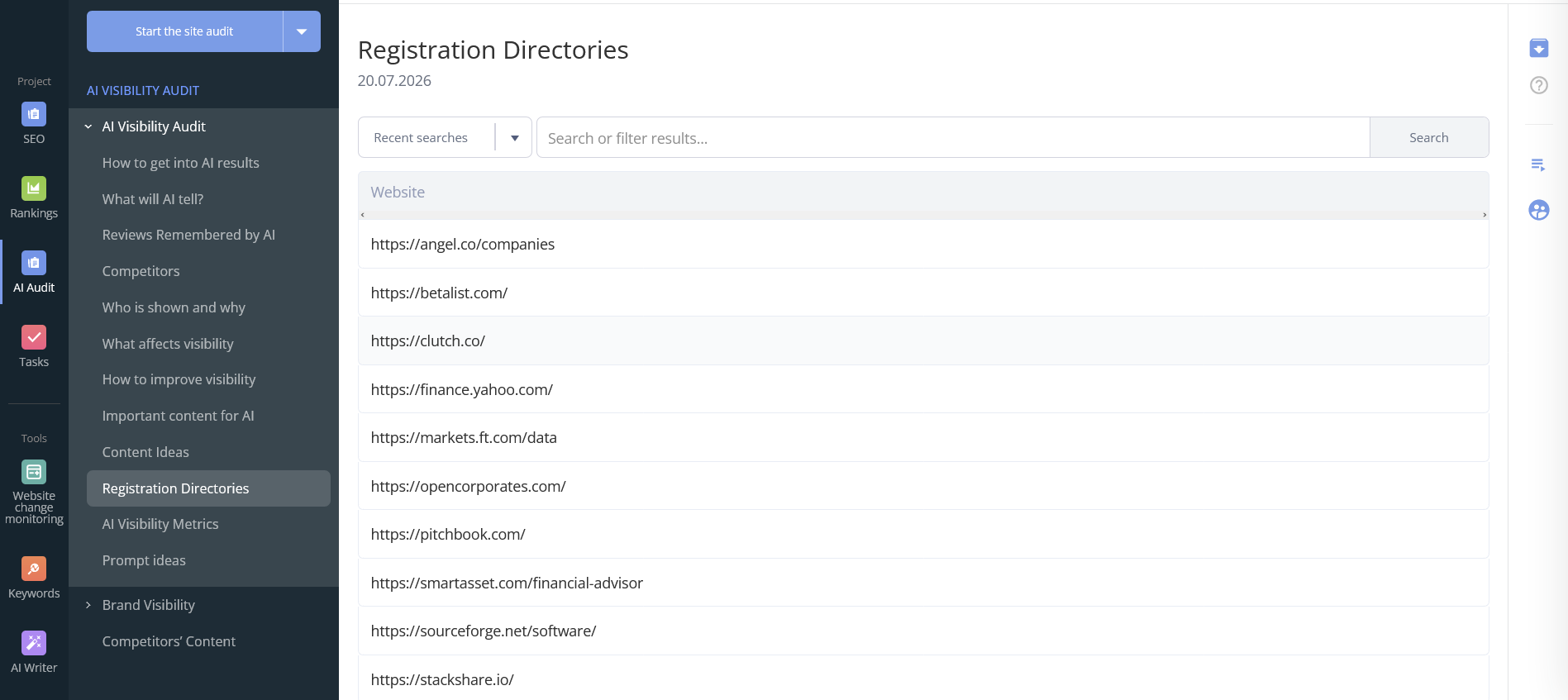
1. Main Directory List for Registration
This is the core of the guide. It contains directory URLs that positively influence how AI systems perceive your website. Unlike classic spam directories, these are platforms with real traffic, moderation, and strong domain metrics (DR, Trust Flow). Each entry includes:
- Directory name and domain;
- Topic focus (general, business, regional, niche);
- Registration terms (free / paid, with or without a backlink);
- Trust level from search engines and AI (based on aggregated data).
2. Priority & Urgency
Not all directories are equally useful for AI visibility. The guide includes a “Priority” column, where each directory is marked from A (critical) to D (optional but not urgent). This helps you allocate time and resources optimally.
3. Technical Parameters for Successful Registration
For each directory, you’ll find practical tips:
- Site description requirements (keywords, uniqueness, length);
- Logo or image upload requirements for better snippets;
- Microformat support that AI bots can read.
4. Field & Data Templates
To save you time guessing, the guide provides ready-to-use templates for titles, descriptions, and categories — optimised for both directory moderators and subsequent AI algorithms.
5. Registration Checklist
A handy table where you can track completed actions: application submitted, email confirmation, publication check, link verification. This turns the guide into a practical working tool.
Why This Guide Matters for Modern SEO & AI Promotion
Many still believe that “web directories are dead” after Google Panda and Penguin updates. But with the rise of generative neural networks, the logic has shifted. Here are three key reasons why this guide has become strategically important.
Building Trust with AI Models
Artificial intelligence — especially large language models — often cross-checks facts across multiple independent sources. If your site appears in authoritative directories, the neural network is more likely to include your data in its responses, whether in search, a voice assistant, or a corporate AI assistant.
A Signal of “Real” Business
AI algorithms are getting better at distinguishing real companies from fly-by-night operations. Having profiles in vetted directories serves as additional proof that your site represents a genuine organisation with a physical address, contacts, and history.
Diversifying the Link Profile for AI Crawlers
Specialised bots that collect data for training neural networks (e.g., Common Crawl, GPTBot) pay attention to link diversity. The directories in this guide provide a natural, thematically relevant foundation, increasing your chances of being included in training datasets.
Faster Indexing of News & Updates
Many modern directories have their own RSS feeds and APIs, which quickly push changes to search engines and AI aggregators. The guide highlights exactly these platforms, helping you get content to audiences faster through AI channels.
Who Will Benefit Most from This Guide?
This guide isn’t a one-size-fits-all solution, but for certain market segments, it becomes indispensable.
SEO Professionals & Link Builders
Those who track trends and want to stay ahead of competitors in adapting to AI search. The guide saves dozens of hours of manual collection and spam filtering.
Small & Medium Business Owners (Local SEO)
For companies targeting a specific city or region, registration in local directories (also included) is critical. AI assistants — especially voice search — often recommend organisations that appear in such directories.
Marketers & Digital Development Managers
If you’re responsible for your brand’s holistic online presence, this guide helps systematise listing efforts and build a unified information layer about your company for neural networks.
Web Studios & Internet Marketing Agencies
Agencies can use this guide as a foundational tool for offering “AI Site Adaptation” services. It adds value to package deals and demonstrates an expert approach to clients.
New Site Owners & Startups
Young resources struggle the most to gain algorithm trust. Registering in the directories from this guide is one of the few legal and fast ways to signal to AI that your site deserves attention.
How to Use This Guide for Maximum Impact
Having a list is not enough. Follow this step‑by‑step workflow after receiving the guide:
- Audit your current presence: Check whether your site is already registered in some directories to avoid duplicates.
- Prioritise: Start with Category A (highest priority) and work your way down.
- Unify your data: Use the exact same company name, address (NAP), and description across all directories — this is a key factor for AI.
- Monitor & refresh: Every 3–4 months, verify that your profiles are still active and add new directories (the guide is updated periodically).
- Analyse results: Track brand mention growth in AI responses using monitoring tools (e.g., SGE tracking or You.com).
💡 Tip: With consistent execution, early signs of improved AI visibility can appear within 4–6 weeks after registration in the core directories.
Conclusion: An Investment in Your Site’s Future
This guide is your navigator in a world where artificial intelligence is becoming the primary intermediary between users and information. Ignoring this aspect of SEO will eventually lead to a loss of organic traffic, which will shift toward sites that are “understandable” and “familiar” to neural networks.
The guide requires no additional software installation and is available online after the relevant audit or as a standalone tool. Ease of use (list + recommendations) is combined with deep analytics based on AI bot behaviour and indexing data from leading search engines.
Use this guide to ensure your business ranks not only in traditional search results but also among the top recommendations of voice assistants, chatbots, and next‑generation smart search systems.