
 English
expand_more
English
expand_more
 Español
 Deutsch
 Français
 Português
 Türkçe
 Polski
 العربية
 हिन्दी

Fix Multiple Duplicate Title Tags and Meta Description Issues for SEO
How to fix technical title meta and description conflicts with Labrika
In the rapidly evolving world of digital marketing, understanding and implementing effective search engine optimization (SEO) strategies is crucial for any website aiming to achieve high visibility and attract organic traffic, sustainable rank growth, and qualified traffic from google search. One of the foundational elements of SEO is the proper use of meta tags and accurate tagging, specifically the title and description tags on every content page and important product or service page. These tags play an essential role in how search engines interpret your content and how users perceive your site in search results and google search snippets. This article will explore the significance of having a single title meta tag and a single description meta tag for each web page, the issues that arise from having multiple tags, and effective strategies to resolve these issues while optimizing your SEO efforts with Labrika’s audit tools.
Understanding the Importance of Title and Description Meta Tags
Title and description meta tags are HTML elements that provide information about a web page to search engines and users, and they influence how your brand name and page text appear in search results. The title tag appears in search engine results pages (SERPs) as the clickable headline for a given result, while the meta description offers a brief summary of the page's content and can act as a natural ad copy for your business. Together, they influence not only how search engines rank your pages but also how users decide whether to click on your link, open your page in a browser, and view more details.
According to SEO best practices and modern technical SEO specification, each web page should have one unique title tag and one unique meta description. This guideline is crucial because having multiple title or description tags can lead to confusion for search engines, potentially impacting your site's visibility and ranking and slowing down correct index processing.
The Role of Title Tags in SEO
The title tag is one of the most important on-page SEO elements for any type of page or article. It tells both search engines and users what the page is about and helps them understand topic relevance. A well-crafted title tag can significantly improve your click-through rates (CTR) from search results and increase traffic to your website. Here are some key points to consider regarding title tags in your overall titling strategy:
- SEO Relevance: The title tag should include relevant keywords that reflect the content of the page and match user search intent. This helps search engines understand the topic and improves the chances of ranking for those keywords and related queries.
- User Engagement: An engaging title can entice users to click on your link over others. Using action-oriented language or posing a question can increase interest and support higher engagement metrics.
- Character Limit: Aim to keep your title tags between 50-60 characters. Titles that are too long may get cut off in search results, making them less effective for users on mobile and desktop device screens.
The Importance of Meta Descriptions
While meta descriptions do not directly influence search engine rankings, they play a crucial role in attracting clicks and improving user signals. A compelling meta description can improve your CTR, which is a positive signal to search engines and can indirectly help performance. Here are some best practices for crafting effective meta descriptions that support clean tagging and clear messaging:
- Conciseness: Meta descriptions should ideally be between 150-160 characters. This length ensures that the entire description is displayed in search results without being truncated for most devices.
- Incorporate Keywords: Including relevant keywords in your meta description can help reinforce the connection between the search query and your content, making it more likely for users to click through from google search or other search engines.
- Call to Action: Encourage users to take action by including phrases like "Learn more," "Discover," or "Get started today." This can motivate users to click on your link and engage with your content.
The Problem with Multiple Title and Description Tags
Despite the clear guidelines, many website owners inadvertently create pages with multiple title or description tags because of misconfigured templates, plugins, or CMS design. This can happen for various reasons, including issues with content management systems (CMS), conflicts between plugins, or simply a lack of awareness and technical knowledge. The presence of multiple tags can lead to several problems that harm visibility, branding, and usability:
How Search Engines Handle Multiple Title Tags
When search engines encounter multiple <title> tags on a page, they may respond in several unpredictable ways that are hard to control via normal on-page SEO:
- Random Selection: The search engine might randomly choose one of the <title> tags to display in search results, which can lead to inconsistency and confusion for users and search console reporting.
- Concatenation: In some cases, search engines may concatenate the titles together, resulting in a long and awkward title that does not accurately represent the content and can look unprofessional.
- Ignoring Tags If the search engine encounters conflicting title tags, it may ignore them altogether and generate its own title based on the page content. This generated title may not align with your SEO strategy, leading to missed opportunities for branding and keyword targeting.
The Impact of Multiple Meta Descriptions
Similar to title tags, having multiple meta descriptions can lead to confusion for search engines and a poor user experience, and a duplicate meta description across more than one URL can weaken relevance signals. A page with duplicate meta descriptions also complicates reporting because it is harder to see which title tags page or content page is being evaluated.
- Random Selection: Just like with title tags, search engines may select one of the meta descriptions at random, which may not effectively summarize the content of the page or reflect your intended marketing message.
- Inconsistent Messaging: If different meta descriptions convey conflicting messages about the page's content, it can mislead users and negatively impact click-through rates.
- Search Engine Generated Descriptions: If no clear meta description is found, search engines may create their own summary from the page’s content, which may not be optimized for user engagement or conversion.
Identifying and Resolving Duplicate Tags
To rectify issues with duplicate title and description tags, website owners should take a systematic approach and rely on data-driven auditing. Here are the key steps to identify and resolve these issues using tools such as Labrika, Search Console, and professional SEO software:
1. Conduct an SEO Audit
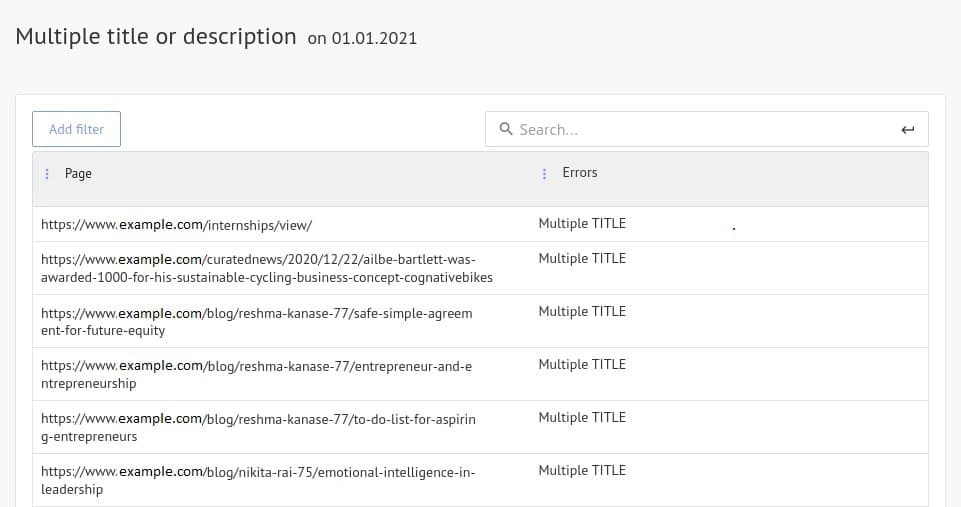
Start by conducting a comprehensive SEO audit of your website, including local and international sections. Tools like Google Search Console, Screaming Frog, or SEMrush can help identify pages with duplicate title or meta description tags, while Labrika can automate meta tagging checks. Look for pages that have:
- More than one <title> tag.
- More than one meta description tag.
- Missing title or meta description tags that cause incomplete snippets to appear.
By using these tools, you can generate reports that highlight any problem pages, making it easier to take corrective action and understand the scope of the issue across your site.
2. Identify the Source of the Problem
Once duplicates are identified, investigate the source of the problem so you can resolve it permanently instead of applying only quick fixes. Common culprits include:
- Content Management Systems (CMS): Some CMS platforms may automatically generate title and description tags based on certain settings or templates. Check your CMS settings to ensure they are configured correctly and that automatic tagging is not conflicting with custom fields.
- Plugins: SEO plugins can sometimes conflict, leading to multiple tags being generated. Ensure that only one SEO plugin is managing your meta tags to avoid duplication and unintended tagging behavior.
- Manual Errors: Content creators may inadvertently add additional tags when editing HTML or using a visual editor. Training your team on best practices can help minimize these errors and keep processes consistent.
3. Consolidate and Optimize
After identifying the source of the problem, it’s time to consolidate your tags and improve on-page content quality:
- Remove Duplicates: Ensure that only one <title> tag and one meta description tag exist for each page. This will help clarify to search engines which tags to index and how to display your snippets.
- Optimize Content: Craft compelling and relevant titles and descriptions that accurately reflect the page content and include targeted keywords. Strive for clarity and engagement to entice clicks, and align them with your overall marketing strategy.
- Test Changes: After making changes, monitor the page’s performance in search results to see if there’s an improvement in CTR and rankings. Use A/B testing, where possible, to experiment with different titles and descriptions.
Best Practices for Crafting Effective Title and Meta Description Tags
Title Tag Best Practices
- Prioritize Important Keywords: Place the most important keywords at the beginning of the title, as search engines tend to give more weight to words that appear earlier. This can improve visibility for those keywords and help your page compete with stronger competitors.
- Branding: If applicable, include your brand name at the end of the title tag for recognition, especially if you have a well-known brand. This can help build brand awareness and trust across your whole website.
- A/B Testing: Experiment with different title formats and wording to see which versions yield the best CTR. Analyzing performance data can help refine your approach and inform future content planning.
Meta Description Best Practices
- Unique Descriptions: Ensure that each page has a unique meta description that accurately reflects the content of that specific page. Avoid using generic descriptions that could apply to multiple pages, as this can confuse both users and search engines and create avoidable duplication.
- Highlight Unique Selling Points: Use the meta description to convey what makes your content or offering unique. This could include benefits, features, or any special promotions that might entice users to click through from mobile or desktop devices.
- Use Structured Data: If applicable, implement structured data markup to enhance the appearance of your search results with rich snippets. This can make your listings more attractive and informative, potentially leading to higher click-through rates.
Monitoring and Analyzing Performance
Once you have optimized your title and description tags, it is essential to monitor their performance using reliable data. Tools like Google Search Console and Labrika reports can provide valuable insights into how your pages are performing in search results and where further improvements are possible.
- Click-Through Rate (CTR): Analyze the CTR for each page to see how effectively your title and description are attracting clicks. A higher CTR indicates that your tags are resonating with users. If you notice low CTRs, consider revisiting your titles and descriptions to make them more compelling.
- Impressions: Monitor the number of times your pages appear in search results. This can help you understand visibility and discoverability over time.
- Ranking Position: Keep track of your page rankings for targeted keywords. This can indicate how well your optimization efforts are paying off over time and whether you need additional technical or content work.
- User Engagement Metrics: Beyond CTR, consider analyzing user engagement metrics such as bounce rate and time on page. If users click through but quickly leave, it may indicate a disconnect between what your title/description promised and what the content delivers.
Regular Updates and Continuous Improvement
SEO is not a one-time task; it requires ongoing effort and adaptation to changing trends and algorithms, as well as regular updates to your tagging strategy. Regularly review and update your meta descriptions and title tags to align with changes in content or SEO strategy. Keeping them fresh can help maintain or improve click-through rates and overall performance.
- Seasonal Updates: For e-commerce sites, consider updating titles and descriptions for seasonal promotions or events to attract timely traffic.
- Content Refreshes: If you update the content of a page significantly, revisit the title and meta description to ensure they accurately reflect the new content and business priorities.
- Competitor Analysis: Regularly analyze competitors’ title and description strategies. This can provide insights into industry trends and help you identify opportunities for improvement.
Conclusion
In summary, optimizing title and description tags is a fundamental aspect of SEO that can significantly impact your website's visibility and user engagement. By ensuring that each page has a unique title and meta description, you not only help search engines understand your content better but also improve the likelihood of attracting clicks from users. Remember to conduct regular audits, monitor performance, and keep your tags updated to align with the evolving landscape of SEO and your wider marketing strategy.
Implementing these best practices, supported by Labrika’s comprehensive SEO audit tools, will enhance your website's SEO, improve user engagement, and ultimately lead to better results in search engine rankings. As you refine your approach, remember that the goal is to create an informative and compelling experience for users while adhering to SEO guidelines. By focusing on unique, engaging titles and descriptions, you can set your website apart in a crowded digital marketplace and build a strong, search-friendly foundation for your business.
Edited on March 8, 2026.